
Colorless or Near-Colorless: Whiteflash Explains Where Diamond Color Grades Stop Being Visible in a Set Diamond
Just another WordPress site
Press Release Disclaimer: This is a press release distributed through the XPR Media network. It has not been independently verified by our newsroom.
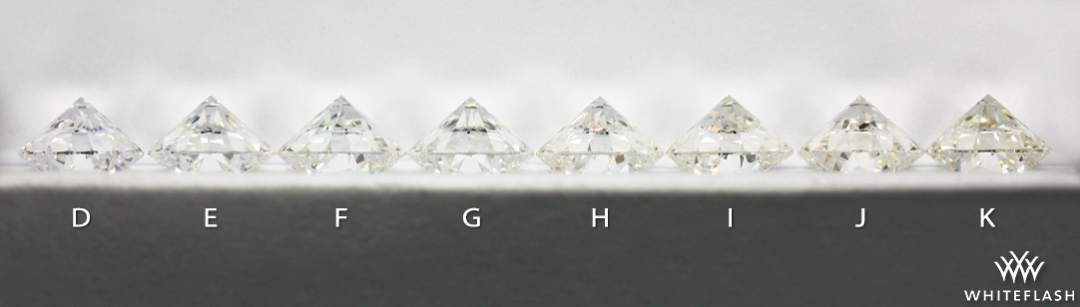

Houston, Texas – Nov. 18, 2026 – Diamond color is graded on a scale developed by the Gemological Institute of America (GIA), starting at D for colorless and progressing to Z, or light yellow. Many shoppers compare grades side by side and assume each step down the scale is visible. Whiteflash is explaining where those differences show up in a finished ring and where they become difficult or impossible to see outside a laboratory.
Colorless and Near-Colorless Grades
The most important portions of the GIA color scale are colorless D through F, and near-colorless G through J. The ultimate color grade is D in the colorless range and appears icy white. EF likewise shows no apparent color from any viewing angle unless a trained grader compares it with master diamonds. A G color diamond is virtually indistinguishable from colorless in most real world situations, except to people with extremely high color acuity. An H color diamond generally looks white, even when viewed from the side and even in larger sizes.
The differences between neighboring grades are extremely small. A colorimeter gives the laboratory a quick baseline, but final color grades are determined by highly trained professional graders working under controlled conditions with carefully vetted master diamonds. Someone looking at a ring on a hand has none of those advantages.
Four Factors That Change What the Eye Sees
White gold and platinum tend to reveal body color, while yellow and rose gold tend to conceal it. With yellow gold, a shopper can compromise slightly on color and capture some savings. Someone sensitive to color who wants white metal with an open profile may prefer the upper-near-colorless or colorless grades.
Color is most easily seen from the side, through the girdle, so a classic four-prong solitaire is more revealing than a six-prong head or a bezel. Bigger diamonds, with their greater volume, tend to show more body color in profile. Shape plays a part too. Some fancy shapes, by virtue of their facet arrangement, concentrate color in certain areas of the diamond, while an ideal cut round tends to diminish the appearance of color face up, which is how most people see a mounted diamond.
Cut Quality Impacts How White a Diamond Looks
An ideal cut diamond returns ambient light from all areas of the crown, and that light tends to make it look whiter. Small amounts of body color are well camouflaged in a precision cut diamond, which is why an ideal cut H color diamond effectively looks like a G color face up. From the side, light return does little to mask color.
“Color is graded at the laboratory, but it is observed on a hand,” said Bryan Boyne, VP at Whiteflash. “A colorless diamond is a wonderful choice for someone who values that icy white look. For many clients, though, a well-cutt diamond in the near-colorless range faces up very white, and that can make the budget go much farther.”
In a natural diamond, most shoppers find their best value in the near-colorless grades, G through J, where a diamond looks white without the price premium associated with colorless grades. Some clients want only colorless, and others actually prefer a diamond with a bit of warmth. Everyone has a different sensitivity to color, so the right grade depends on the person and the setting.
Top Color Paired With Top Cut
For clients who want colorless grades, the A CUT ABOVE® Collection Series is the best of the best of thesuper ideal brand, pairing D to F color with VVS clarity or better. Every A CUT ABOVE® diamond is natural and carries Dual Certification: a GIA Triple Excellent grading report together with an AGS Ideal Report by GIA. Each one also must pass comprehensive additional testing at Whiteflash. These diamonds are in-stock and come with an advanced light performance image package including ASET, Ideal-Scope, and Hearts & Arrows imaging. They are immediately available and exclusive to Whiteflash, and all A CUT ABOVE® diamonds are eligible for the popular Whiteflash Upgrade Program.
About Whiteflash
Whiteflash is a modern jeweler specializing in precision cut diamonds, designer engagement rings, and fine diamond jewelry. As the exclusive home of A CUT ABOVE® Super Ideal natural diamonds, Whiteflash is internationally recognized for scientific light-performance analysis, including ASET, Ideal-Scope, and Hearts & Arrows imaging. Based in Houston, Texas, Whiteflash serves a global clientele and is an authorized retailer for the finest brand name designers including Tacori, Verragio, Simon G., A. Jaffe, and Vatche. All A CUT ABOVE® diamonds come with the popular Whiteflash Upgrade Program.
Media Contact
Company Name: Whiteflash Inc.
Contact Person: Tiffany Moore
Email: Send Email
Phone: 8322526770
Address:2150 Town Square Place Suite 330
City: Sugar Land
State: TX
Country: United States
Website: Whiteflash.com
Press Release Distributed by ABNewswire.com
To view the original version on ABNewswire visit: Colorless or Near-Colorless: Whiteflash Explains Where Diamond Color Grades Stop Being Visible in a Set Diamond

